ARCO Calls for New Zealand-Style Legal Framework to Support Growth of UK Integrated Retirement Communities
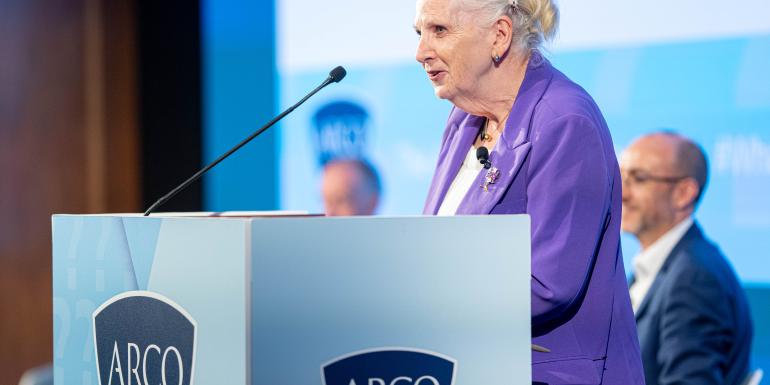
Michael Voges, Chief Executive of ARCO (Associated Retirement Community Operators), addressed a meeting of the All-Party Parliamentary Group (APPG) on Housing and Care for Older People on 16 June 2026 to discuss the draft Commonhold and Leasehold Reform Bill and ARCO's proposals for a new legal tenure model for the UK's Integrated Retirement Community (IRC) sector.
ARCO is advocating for a framework inspired by New Zealand's Retirement Villages Act 2003, which underpins that country's successful "license to occupy" model for retirement communities.
Why is ARCO proposing a New Zealand-style model for UK retirement communities?
Speaking to Parliamentarians, Michael Voges highlighted that the UK's leasehold-based approach to Integrated Retirement Communities is unusual by international standards. In many countries, including New Zealand, retirement community residents occupy their homes through contractual arrangements rather than traditional leasehold ownership structures.
New Zealand's Retirement Villages Act 2003 provided a clear legal framework that increased consumer confidence, attracted investment, and supported significant sector growth. Since the legislation was introduced, New Zealand's retirement village sector has approximately doubled in size over two decades.
ARCO believes that adopting a similar legal framework in the UK could help unlock investment, accelerate the delivery of housing-with-care developments, and expand housing choices for older people.
Housing Committee recognises unique characteristics of Integrated Retirement Communities
The discussion follows comments made on 27 May 2026 by MPs on the Housing, Communities and Local Government Committee. Committee members argued that Integrated Retirement Communities may warrant a different regulatory approach from other leasehold housing and retirement housing models because of their distinctive care services, operating structures, and financing arrangements.
This reflects growing recognition among policymakers that IRCs combine housing, care, wellbeing services, and community facilities in ways that differ from conventional residential developments.
Why are Deferred Management Fees important in Integrated Retirement Communities?
Michael Voges also explained the role of Deferred Management Fees (DMFs), sometimes referred to as event fees, in the financial model used by many Integrated Retirement Communities.
DMFs are typically paid when a property is resold and can help reduce upfront purchase costs and ongoing service charges for residents. They may also protect consumers from unexpected future costs by helping fund long-term community services and facilities.
ARCO argues that Deferred Management Fees are an important mechanism for maintaining affordability, particularly for older people who may have significant housing equity but limited retirement income.
APPG Co-Chair Anna Dixon MP expressed support for the role that Deferred Management Fees can play in making Integrated Retirement Communities accessible to a wider range of consumers.
As Michael Voges noted, many prospective residents are "asset rich but income nervous", meaning they may have substantial wealth tied up in their homes but are reluctant or unable to meet high recurring monthly charges.
Growing parliamentary interest in New Zealand's retirement village sector
Interest in New Zealand's housing-with-care model is increasing among UK Parliamentarians. Recent Written Parliamentary Questions have asked Housing Ministers:
- What assessment has been made of introducing legislation similar to New Zealand's Retirement Villages Act 2003 in the UK.
- Whether the Government will examine lessons from New Zealand's retirement village sector when considering reforms to housing policy and the future supply of specialist housing for older people.
- How international models could support the growth of Integrated Retirement Communities and help meet the housing and care needs of an ageing population.
ARCO continues to engage with policymakers on reforms that could support investment, consumer protection, and the long-term expansion of the UK's Integrated Retirement Community sector.
NOTES FOR EDITORS
- ARCO is the national membership body for charity, not-for-profit and private operators of modern housing-with-care schemes, known as Integrated Retirement Communities (IRCs). IRCs typically comprise 24/7 on-site support, a bar/café/restaurant/bistro, personal care if it is required and extensive communal facilities, such as swimming pool, gym, gardens, etc. The average age of moving in to an IRC is 79 and the average duration of residence is around eight years.
- The Housing Minister recently told MPs:
“… the Government understand the distinct operational and financial models that underpin specialist retirement housing, and that we recognise the important role that integrated retirement community operators play in providing high-quality housing for older people… the way in which the retirement housing sector functions in a world in which commonhold is the default tenure, and whether some kind of exemption is required, are among the many questions we are seeking feedback on in our consultation on moving to commonhold and banning leasehold for new flats.”
https://hansard.parliament.uk/commons/2026-04-13/debates/51CD692E-9426-452B-AB3F-40AD74D25FEA/LeaseholdReformIntegratedRetirementCommunities
- In the report of its pre-legislative scrutiny of the draft Commonhold and
Leasehold Reform Bill, the Housing, Communities and Local Government Committee noted:
“…the care model and complex financing of some retirement housing— particularly Integrated Retirement Communities—may justify a different approach to other leasehold housing.”
https://publications.parliament.uk/pa/cm5902/cmselect/cmcomloc/40/report.html
- A briefing on ARCO's proposals for a Retirement Occupancy Lease can be found here: The Retirement Occupancy Lease - Applying international best practice to housing with care_1.pdf