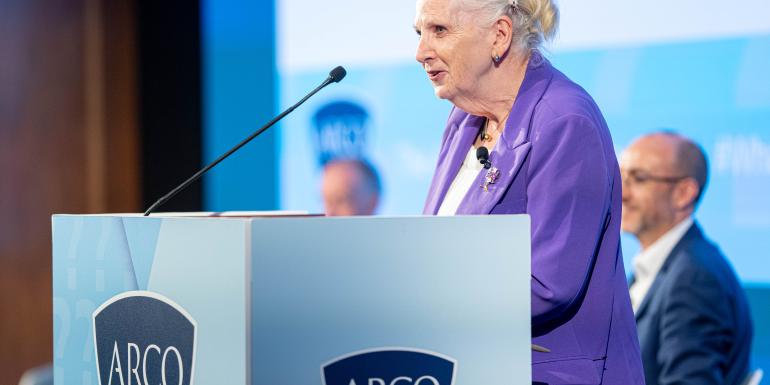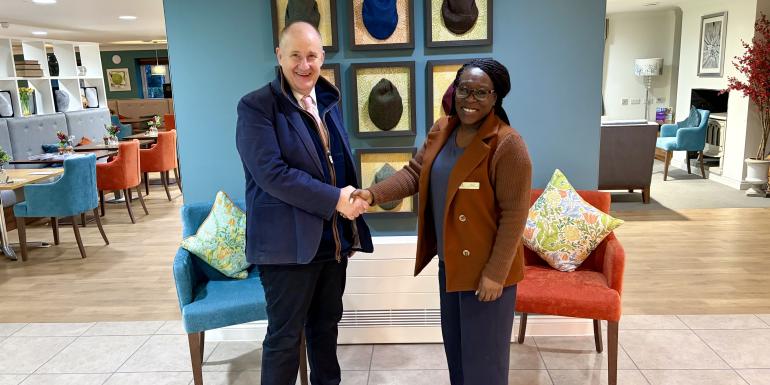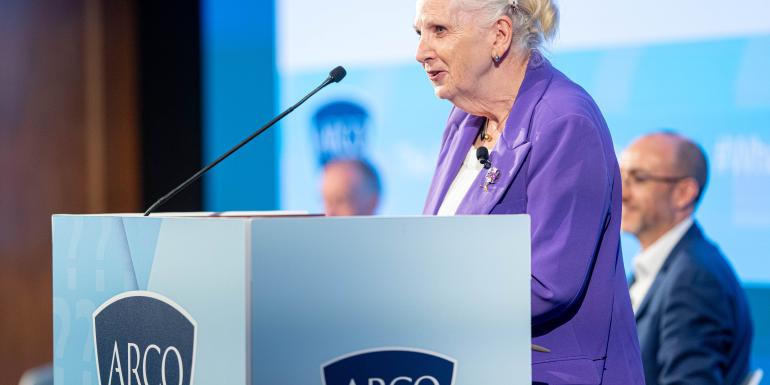
Below is the full speech by Baroness Taylor of Stevenage, Parliamentary Under-Secretary of State (Lords Minister for Housing and Local Government), Ministry of Housing, Communities and Local Government, to the 2026 What Next? ARCO Annual Conference.
Good morning, everybody.
First of all, you're quite right: we live in very interesting times. And it was a great pleasure this week to welcome the Right Honourable, I think we have to call him, member for Wakefield, to the House of Commons.
I've worked with Andy for a long time, many times over the years. And as has already been said, he has a particular interest both in housing and in adult social care. So, I'm very optimistic for the future. The other thing about Andy is he is in the co-operative movement of the Labour Party. And I heard earlier was very much where we are in the co-operative movement, which is policy driven by voices from the users of services and experiences. And I think that's really important going forward, and I very much look forward to working with him.
And can I just say it's great to be back in this building, the IET building, and that's because the IET gave me my very first job when I was a very nervous 15-year-old. And I went in to work in the—it was the IEE then—offices in Stevenage. It was their publishing division. And it wasn't the seven pounds a fortnight that I got paid that attracted me to the job. That tells you how old I am. It was the luncheon vouchers. You got luncheon vouchers with the job. For those of you who don't know anything about luncheon vouchers, that meant you could go to the local bakery or Tesco's and get something for your lunch, or something to take home with you in the evening, which was fantastic. So it's a beautiful building, this, and it's lovely to be back here again.
It’s a great pleasure to be with all of you today. And let me start by thanking ARCO, its leadership, and its members for bringing us all together. For the leadership, you've shown over many years in championing housing-with-care and integrated retirement communities.
This is a sector I've engaged with for some time. Obviously, as leader of a council, we were a council with our own social housing, including supported housing. So, I was engaged then. But since then, before entering government, I had the privilege as a shadow Lords Spokesperson for Housing of hosting discussions with many of you in the House of Lords, listening to operators about the opportunities and the challenges that you all face. So, I recognise this is not a new conversation, but it is becoming an increasingly important one.
Because you all know this, but we are facing a very profound demographic shift. The number of older people is growing rapidly. Longevity is increasing, and with that comes both opportunity and responsibility.
Opportunity because longer lives genuinely can mean more active years, more contribution, more connection – and I think we saw some of that on the screen earlier, and I'm sure we're going to see more later on. Responsibility because we must ensure that our housing, our services, and our communities are equipped to support people to live those years well.
And that's why what you do matters so much. Housing-with-care and integrated retirement communities, in particular, have a key role to play in meeting this challenge, supporting people to live independently for longer while ensuring they stay connected to care, services, and very importantly, to their communities.
Because ultimately, this is about the role housing plays in shaping people's experience of later life.
Now, I'm in my dream job – not that I ever would have dared dream that I would have this job, and I think Matt probably feels the same – but when they when I was asked to be the Lords Minister for Housing and Local Government, that is literally my dream job. I'm passionate about housing. And housing, for me, is not just about bricks and mortar. It shapes so much of our life, our experiences, our independence, health, well-being, our connection to others, and where we are with our community.
As people change, as we all know, needs often change. Homes that once worked may well become harder to navigate or maintain – and I'm at a stage in my life, as you can see, where I'm starting to think about these matters. And access to support services and social connection can become much more important.
For some, adapting their existing home will be the right choice. For others, moving may offer a better solution. There's no single model, as you all know, that works for everyone, and people's preferences and circumstances vary so widely. That's why it's important that people have choice.
And where integrated retirement communities have such an important role to play in offering people a more supportive environment as needs change over time. And when the system is working well, the benefits extend beyond individual households. There are much wider benefits, of course, across our health system, our housing market, our society as a whole. And as a government, we're trying to look in a much more holistic way about how we deliver across all of those agendas with public service transformation.
So, first of all, on health, we know that suitable housing plays a vital role in keeping people well. It reduces falls, it reduces hospital admissions, and it helps prevent delayed discharge by making sure people have somewhere appropriate to go back to.
Second, on the housing market, many older households are living in homes that are larger than they now need. If we can offer attractive, appropriate alternatives, we can support people to move in a way that works for them, freeing up family-sized homes for the next generation.
And third, for communities, because well-designed homes for later living can play a vital role creating mixed, intergenerational neighbourhoods – places where people of different ages live alongside one another, and that really does support stronger local connections. Which is why housing for older people matters not as a niche part of the system, but as part of how the system works as a whole.
Against this backdrop, there are significant challenges across supply, demand, and the functioning of the market for older people's housing.
So, on supply, we know there remains a substantial gap between what is currently being delivered and what is needed.
On demand, we must recognise that older people are not a single uniform group. Needs and preferences vary widely, and our housing offer absolutely must reflect that diversity.
There are still issues of awareness, understanding, and trust. Many people simply do not know what options are available, or they feel uncertain about making a move.
And there are questions around confidence, shaped in part by issues or practice across the wider market, including concerns about quality, charges, resale, and many other issues. And these issues underline why having a clear plan for this sector really, really matters, because it needs to support a range of models to provide confidence to consumers and enable delivery in a way that is sustainable over the long term.
I also recognise the specific concerns within this sector around investment certainty and around the implications of wider reforms. I know that there's a live debate, and you've already referred to it this morning, about the leasehold and commonhold reform. So, let me address that directly.
The government is committed to reforming leasehold and to making reformed commonhold the default model of home ownership for new flats. These are significant long-term reforms to deliver a fairer system for homeowners. But we also recognize a simple point: that not all approaches to housing delivery are the same, and that is particularly true for your sector.
Integrated retirement communities bring together housing, care, and community. They rely on long-term stewardship with operators remaining involved over time, and funding models that often depend on returns realised later, including at resale. That creates a genuine question with the commonhold model, which is designed around homeowner control. We understand that.
And we have heard clearly the concerns you have raised, particularly around investment certainty, the future of deferred fee models, and the implications for schemes already in development. Through the draft Commonhold and Leasehold Reform Bill, we've already taken steps to ensure a smooth transition, for example, by ensuring that existing leasehold buildings have a choice on whether to convert to commonhold, and we've been consulting on measures to protect live developments and new supply.
In our Moving to Commonhold consultation published alongside the Bill, we've explicitly encouraged views on how commonhold should apply to older people's housing, and whether different approaches may be needed generally or for different parts of the sector. That consultation closed in at the end of April. We received a wide range of responses, including from many in this room, and thank you very much for all of the work you've done to put in responses. They will help us, and we're considering them very carefully.
We were clear from the outset that we are listening, and we need your help to get the detail right. This is a complex area with strongly held and sometimes competing views. So, our approach is to work this through very carefully, balancing two considerations: delivering on our manifesto commitment to end the feudal leasehold system and strengthening consumer protection, while ensuring this important sector remains viable, but can also thrive and grow. And we will continue to engage with you as we do so, because our ambition is not simply to reform home ownership, but to make sure it works in practice for this sector and for the people who rely on it.
To support the growth of older people's housing, we need a clear, coherent plan to fix the system – one that builds confidence, unlocks investment, and supports delivery at scale. We've already made good progress, introducing critical planning reforms to ensure the needs of older people are properly considered from the outset, integrating housing with access to services, transport, and community infrastructure.
And we recently consulted on the new National Planning Policy Framework proposing new requirements for authorities to identify sites for older person's housing, clearer weight for older person's housing need within planning policy, and new requirements to ensure specialist housing for older people comes forward in the right locations with the right access to services. We also proposed new requirements for authorities to deliver more accessible housing, boosting the supply of M4(2) homes designed to adapt to people's changing needs over time.
We've consulted on new design and placemaking guidance, emphasizing the importance of creating liveable neighbourhoods that support health, connection, and independence, because it's not just about building homes. It's about building places that are inclusive, connected, and designed for people at every stage of life, and that create great places to live.
And that's why our government has committed to bring forward the next generation of new towns using all the powers at our disposal to deliver affordable, well-designed, inclusive communities which suit the needs of different age groups with specialist housing built to accessible and adaptable standards. These interventions, alongside addressing issues around consumer protections, will help restore the trust we need to see in the system and will set the strong foundations to boost both consumer and investor confidence.
Lastly, let me turn to what's coming next. We know the sector needs certainty. We will keep working with you to ensure our approach reflects both the opportunities and the realities of delivery on the ground, because this is a partnership. Government can't do this on our own. But together, through shared ambition, clear policy, and sustained collaboration, we can build a system that truly works for later life.
So, let me finish with this. The question we face is not simply how we house an ageing population; it's how we enable people to live well for longer – to remain independent, to stay connected, to feel part of a community. That's what good housing makes possible. That's what your sector delivers, and that's what we must now achieve at scale.
The government recognises and values the important and significant contribution you make to older people's housing. And as the Minister responsible now for older people's housing, I can guarantee you we will continue to work with you to help ensure older people have access to more high-quality housing options.
So, thank you for your leadership, for your collaboration, and for your commitment to improving the lives of older people across our country. I look forward to continuing our work together in the months ahead, and thank you all very much for listening to me.